For Sunstinger, beauty and misery are not opposites. They exist side by side – in the places they call home, in the experience of feeling trapped, and in the noise they make together.
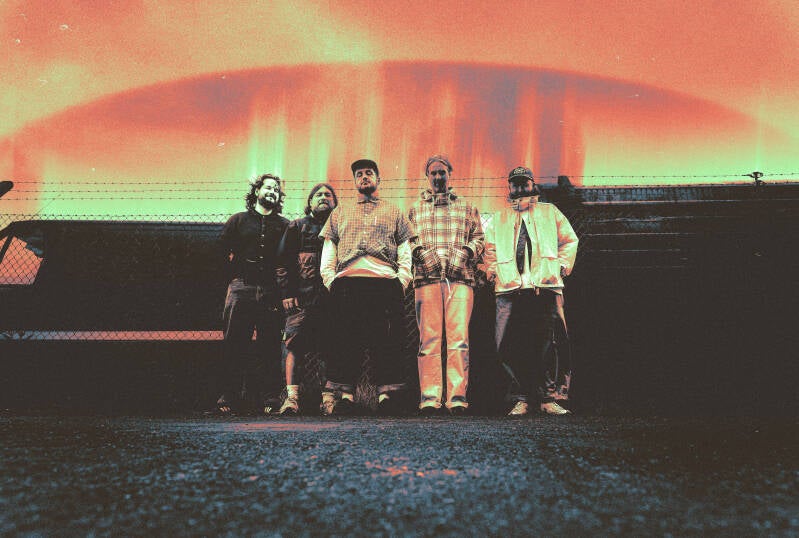
Photo Credits: @daveburon
There is something inherently claustrophobic about Sunstinger. The Scotland-based post-shoegaze five-piece deal in heavy atmospheres, walls of noise and lyrics that refuse to look away from uncomfortable places. Their music is expansive and suffocating at once: beautiful enough to pull you in, heavy enough to make you feel the weight of everything underneath it.
For Taylor Wright, vocalist and guitarist, that tension is not accidental. Their latest EP was approached as a complete emotional arc, moving from numbness through pain and anger before arriving somewhere unexpectedly quieter: acceptance.
“The beginning starts in a place of heavy numbness, which slowly shifts into raw pain and anger as you confront where you are. The arc moves through that frustration until you reach a point of relief, acceptance and ultimately a strange kind of comfort- realising that once you accept dark surroundings, they stop controlling you, and you can control them.” He ties this directly to his experiences with sleep paralysis and out‑of‑body episodes – not metaphorically, but literally. “Sleep paralysis a terrifying feeling of being trapped in your own body, unable to move while everything feels heavy and suffocating. It’s the ultimate metaphor for how it feels to grow up in these places that have been left behind. That shared feeling of being stuck, suffocated by your surroundings, and having to figure out how to survive within it.”
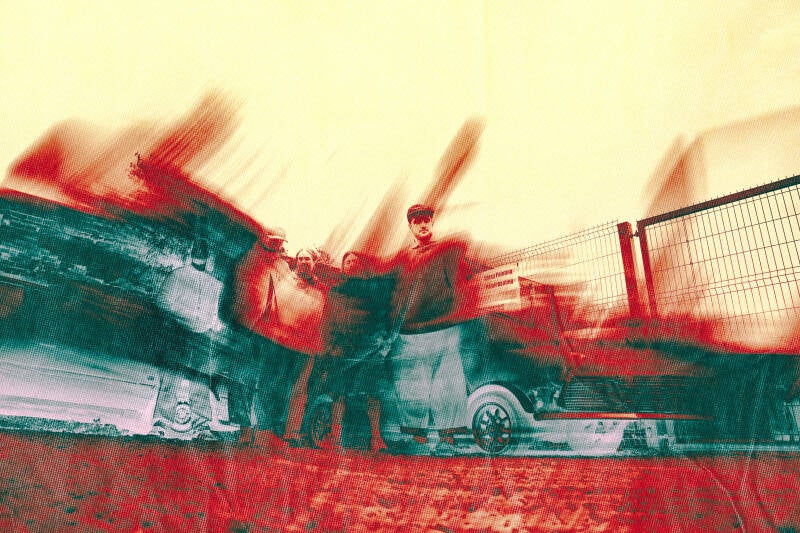
Photo Credits: @daveburon
“We want the record to sound like that exact collision. Beauty and weight existing in the exact same place.”
Wright describes their surroundings as “beautiful but crushing, abrasive but oneiric and oppressive but romantic,” a contradiction that finds its way directly into the band's sound. With three guitars occupying the same space, the tension between melody and abrasion happens almost instinctively. That balance is also a reflection of the places Sunstinger inhabit: “This reflects where we live and write. Places can be visually stunning and quiet on the surface but carry an underlying weight. It’s that frustration that has built over years of false promises in villages left behind in time. We want the record to sound like that exact collision. Beauty and weight existing in the exact same place.”
There is no romanticising misery here. Instead, Sunstinger seem interested in what happens when you stop trying to escape it. When asked what comfort means in the context of misery, Wright rejects the idea that acceptance means surrender. “To me, comfort in this context isn’t about giving up. It’s more about dropping the exhaustion of pretending things are fine. Real comfort comes when you stop waiting for a saviour or ‘rapture’ and just say ‘this is where I am. It‘s rough, it‘s bleak, but it‘s real.’” There is something cathartic in that honesty. Rather than trying to make the ugliness disappear, Wright describes turning it into something tangible.
“Once you accept an uncomfortable environment, it stops controlling you. You start controlling how you live in it. In the context of the EP, comfort is taking raw, unpolished misery and turning it into something loud, cathartic and entirely your own. There is power in that.”
“The imperfections are where the character lives.”
That philosophy extends into the recording process itself. Sunstinger deliberately avoided polishing the life out of their songs, choosing instead to capture the band as they actually sound when they play together.
“We chose to keep natural bleed, feedback, string rattles, accidental pedal hums etc. We spent less time on trying to get perfect takes on vocals, so everything felt more honest.”
Rather than building an entirely new studio identity for the record, they used the same setup they take on stage. “We only used our own set up which we use live, rather than experimenting with other amps, pedals, instruments with an aim to replicate the suffocating live shows. For me, the imperfections are where the character lives, it gives the EP more weight.”
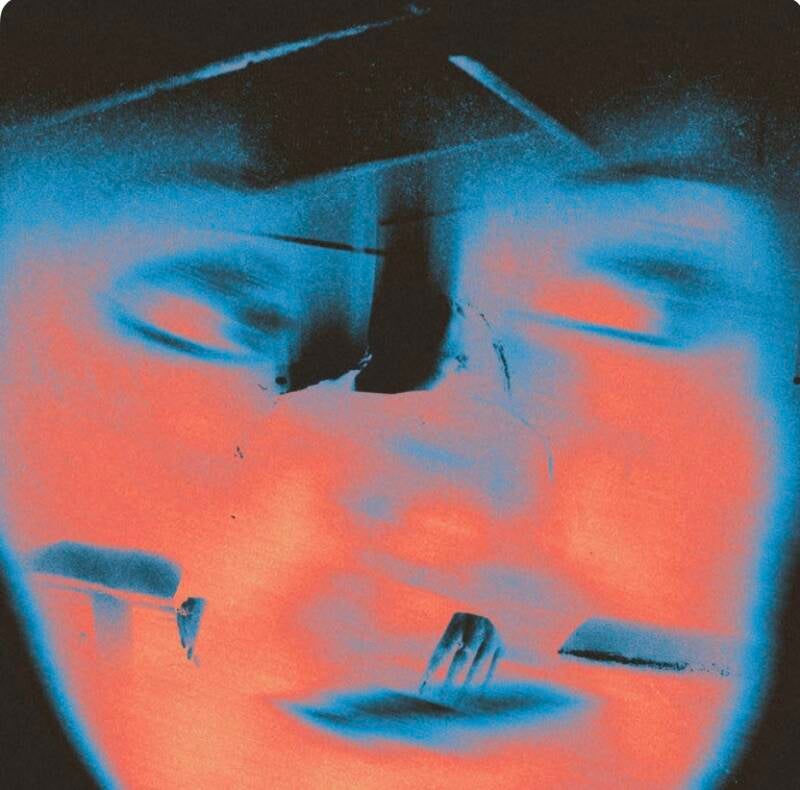
Cover Art for SPARE ME THE RAPTURE
“It’s cold, arrogant and deeply lonely.”
One of the EP's biggest sonic risks, meanwhile, came from shifting the emphasis towards rhythm. “Probably leaning harder into the driving rhythm sections rather than just relying on guitar noise to carry the weight. Bringing Colm in on drums completely shifted our momentum and has given a new edge to our sound.”
That momentum is particularly evident on “ZEROSUM”, a song Wright has been working towards for some time. But perhaps the most unexpected moment arrived in the form of a single, brutally direct line.
“I think the line 'All my friends are dead'. It's in the chorus of ‘NEEDRR’. You know, it kind of just came out. I still haven’t figured out what it means or where it came from yet. It's pretty blunt. We put it in big writing on the back of the Vinyl cover. It's cold, arrogant and deeply lonely.”
The moment Wright realised Sunstinger had reached something new was not a polished studio trick or some carefully engineered production detail. “Just hearing the raw energy captured through the speakers without needing studio tricks was the moment we knew we were in a new gear. Songs like "ZEROSUM" are songs that I’ve been trying to get to for a while now. I think this is the first EP I’m completely happy with everything. It’s definitely the best example of who we are as group.”
And while Wright may be the voice guiding us through the EP, he is quick to make clear that it is ultimately the product of all five members. “And obviously credit to the rest of the boys Dave, Colm, Bill and Scott. It’s been a graft, but I think we’ve got something good here.”

Photo Credits: @daveburon
What makes the record compelling is that it does not pretend to have solved everything. If anything, its honesty comes from the opposite conclusion. Wright does not claim to have fully understood the experiences that shaped the EP, only that music gives him somewhere to investigate them.
“I don’t think I even understand myself yet to be honest. But I do love music, and when I listen to music or create music it sometimes helps me learn more about myself and my personal emotions. Hopefully listeners can feel this too.” Perhaps that is the most fitting place to leave Sunstinger.
The EP begins in numbness and moves through anger, frustration and pain before arriving at acceptance. It does not promise that the darkness disappears. Instead, it suggests that there is another way to live with it: to stare directly at the places that make you feel trapped and make something of your own.
SPARE ME THE RAPTURE OUT NOW.
Words by
Marie Müller, 2026