Wifeswap’s new EP marks a shift from the claustrophobic anger of their earlier work into something heavier and more reflective. The band spoke to us about cracked-open songs, Dublin’s disappearing venues and the strange grace of watching bigger artists up close. This is Wifeswap’s turning point, so make sure to tune in.
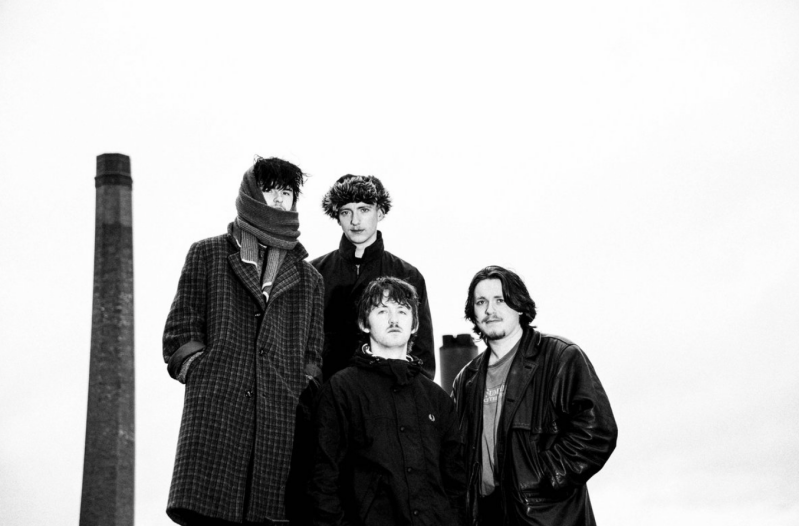
Photo Credits: Aidan Dowling
When asked to introduce themselves, the band doesn’t give you a neat elevator pitch. "I think Joe Strummer’s description of Rimbaud in Ghetto Defendant as a gutter poet is something that comes to mind. Mix that with Lou Reed’s three chords is jazz philosophy but make the chords sound as lonely as possible and I think that’s the best way I can describe it," Joe, their singer, tells us.
It’s an introduction that feels more like a mythical thesis than anything. They don’t know how others describe them – or maybe they don’t care – but they’ve heard comparisons that land somewhere between the feral and the iconic. "We’ve gotten The Birthday Party a bit and Trevor Dietz, the Fontaines manager told us he thought we were a mix between PiL and Whipping Boy which I thought was interesting."
To go even further, we asked the members about their individual roles. Jasper (guitar) is the architect of the band’s sonic uniqueness. "His creativity has been so important in curating our own sound. The merging of our own tastes and ideas has really become the essence of our own sound."
Lorcan (drums) is the anchor. "I always look to him on stage, he puts me at ease because I trust that he’ll hold it all down and if something goes wrong I know that we’ll laugh it over after and move on," Joe says.
And Cian (bass) is the quiet force that keeps the whole thing from collapsing. "He really is the ultimate nerve killer. He’s the perfect person to have in the green room or in the car before a show. Always leaving it until we walk on to switch it on and kill it really helps take you out of a place where you get in your own head."
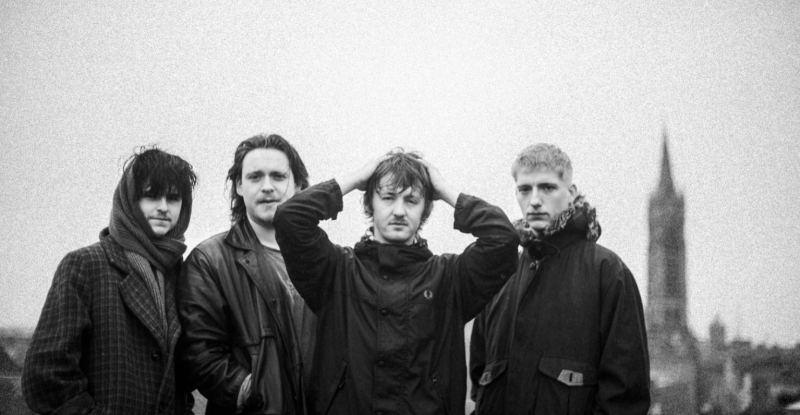
Photo Credits: Aidan Dowling
"It’s beautiful and devastating simultaneously"
Their new EP Digging marks a shift – not away from darkness but rather deeper into it. "I think it’s much more reflective than reactive like our early singles. In a visual sense it’s kind of like swapping this claustrophobic anxiety inducing city for the expansive nothingness of rolling hills." Where their early singles were sharp with anger, this EP is heavier and more devastating. "It’s easy to be angry and I think this EP takes us into a heavier space where you realise all of the things that you are grieving, where you just have to learn how to be able to live with them."
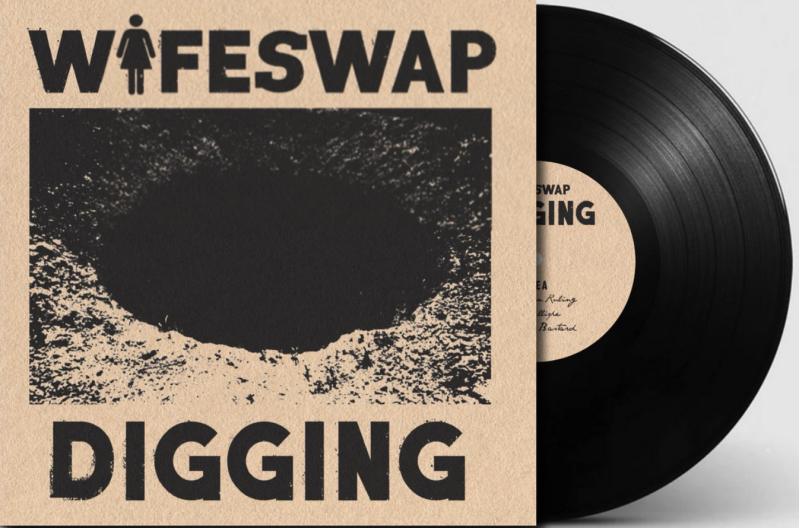
If there’s a single thread tying the EP together, it’s grief. "Loneliness and isolation are really the central themes that tie almost all of our work so far together and I think the EP is no different. The overarching theme of grief wasn’t really intentional but something that I kind of just realised while we were in the studio recording it," Joe explains.
"Jasper brought it back to life for me."
Every record has a problem child. For Wifeswap, it was 'Pearl Bastard'. Joe remembers: "I really started to not care for it that much but the guys really pushed for it to stay in the set and people told us that they liked it. When it came time to think about recording and the sequencing of the EP, it made sense to me as the middle track, functioning as this centre piece of sorts."
The song’s imagery came from Lillian Hallegua’s The Pearl Bastard, read in a single morning before work. But it wasn’t until the studio, and until Jasper took the reins, that it finally became what it needed to be. "Jasper was super passionate about this one, and was coming up with ideas for the production of it, so when we got to the studio I said to him that he should direct this one. He did, and I’m super proud of it, when I listened to the final masters before we decided to show anyone else outside of the band it was my favourite."
"Just be a good person, be passionate about the art that you make, and dig your heels into the emotions that fuel it and nobody thinks about the mistakes, the people that it’s meant for will find comfort and relate, those who it wasn’t meant for don’t really matter in that moment."
They’ve supported Yard, Nerves, Pete Doherty, Been Stellar – a list that would inflate the ego of any band. Instead, when asked about what they learned from bands like these, they talk about kindness. "How to be graceful in your success. They were all so kind." They talk about perfectionism, comfort, craft, and the strange intimacy of watching a band from side‑stage. "Watching Been Stellar was incredible, it felt like hearing the record through the PA and the idea that that could be replicated so closely blew my mind." And then there’s the surreal moment: opening for Peter Doherty on their fourth ever gig. "I think the thing I learned that night was how to just get on with it when the stakes felt high. We had no access to a green room that I could hide out in before I went on. I just had to stand in the crowd and walk on when it came time."
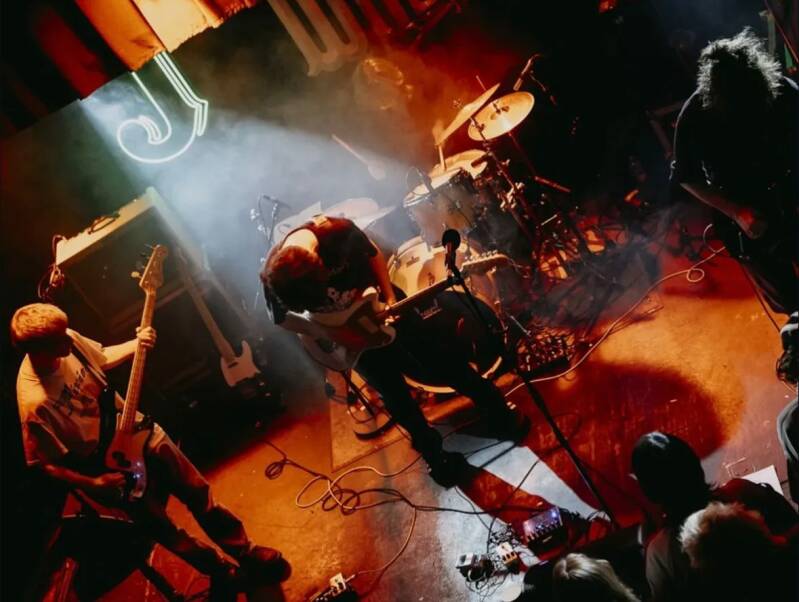
Photo Credits: Stefan Tivodar
"Either way I’m not getting much sleep."
Ask where they fit in Dublin’s independent scene, and thex don’t sugarcoat it. "I don’t really know to be honest, I don’t think we’ve ever really fit in to the scene. We are friends with other people in bands in Dublin but most of them don’t seem to be part of the “scene” so much either. It can all just feel like a circle jerk at times and I don’t think appeasing people we don’t like in an attempt to get support slots or more people at our shows has ever really felt right to us." Harsh words, but respectable for sure. They’re not interested in playing the game. "Sometimes I wonder if it’s a blessing or a curse to be within that, maybe I’ll never get to do this professionally, but I can’t compromise my values," Joe says.
The immediate answer for what the Irish scene needs is: venues. "I played my first ever gig in my 2nd year in The Workman’s Cellar. It shut down about a year ago." They also talk about the need for DIY culture, physical releases, and labels that actually care. "Beyond the artist side of things, I think Blowtorch Records who we are very fortunate to work with on the physical release of our record are doing something incredible. The not for profit but to be sustainable ethos of the label in order to give more bands the opportunity to put out physical releases is in desperate need in order to help smaller artists thrive."
And their own morals are not to be compromised here either: "We’re just trying to keep our tickets as affordable as possible, support the bands we love by buying their records and seeing their shows and be thoughtful about the designs of our merch and record sleeves so those who do decide to spend their money get something with some effort and attention behind it."
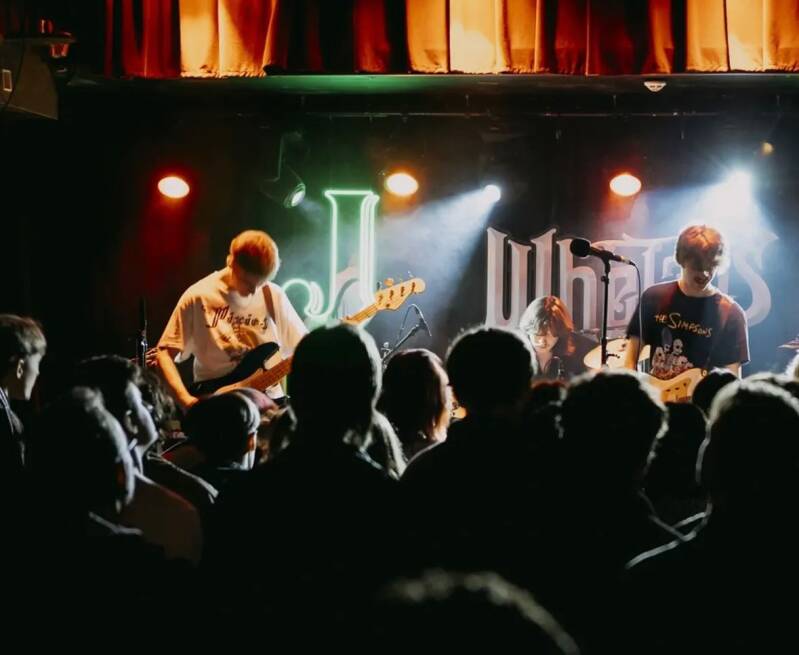
Photo Credits: Stefan Tivodar
Their dream gig is cinematic: a sunset to twilight pilgrimage at Red Rocks. "I think Life Without Buildings at the peak of the sunshine with Japanese Breakfast next with the set wrapping up at sunset. Once the twilight is setting in Been Stellar or Primal Scream take the stage. Bob Dylan wraps up the night in the dark with the warm lighting that he’s been using for the last few years. I think that would be really special," Joe pitches to us. It’s a lineup that mirrors Wifeswap perfectly: literary, emotional, genre-fluid, and quietly devastating.
Looking towards the future, they know growth means outgrowing yourself. They hope the EP can be reminisced, even in the years to come: "I hope we can look back at it and still feel proud of what we’ve done here. I think it caps off that period of our lives and the band in a really succinct sense.“ They also know cringe is inevitable. “Maybe that’s what we should be hoping for."
Wifeswap feel like a band standing on the faultline between what they’ve survived and what they’re about to become. If this EP opens doors, they’ll walk through them and if it doesn’t, they’ll keep going anyway. Because the work is the point, the loop is the point, and the feeling is the point.
DIGGING OUT NOW.
Words by
Marie Müller, 2026.